

The Right Match
How Cambridge Caregivers Finds the Right Caregiver for Each Client
When a Cambridge Caregivers team member arrives at a client’s door, the family needs to feel confident about the person walking in.
Does the caregiver understand Mom’s brain change? Can the caregiver safely help Dad transfer from his wheelchair? Will the caregiver know what to do — and provide care with patience, warmth and respect?
Long before that first knock on the door, the Cambridge Caregivers team has been working to address those questions.
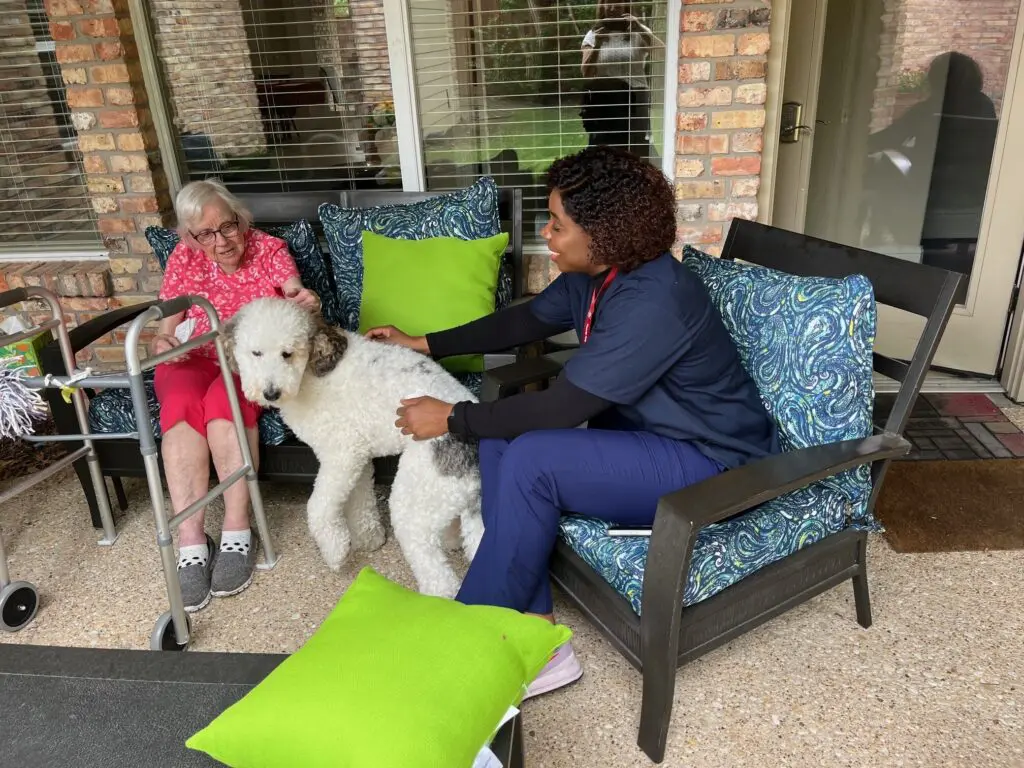
Finding the right caregiver for each client starts with the essentials: understanding exactly what kind of care the client needs. But at Cambridge Caregivers, the matching process goes beyond simply checking boxes on a care plan. It draws on the observations and insights of an entire team, and, whenever possible, considers the personalities, preferences and interests that can turn an appropriate match into a great one.
First, Understand the Client
The matching process begins with listening.
When a client (or a client’s family) first contacts Cambridge Caregivers, a Community Liaison learns what prompted them to seek help. An intake coordinator gathers more detailed information, and an in-home assessment gives the team an opportunity to see the client in his or her own environment.
Those conversations and observations help form a detailed picture of exactly what the client needs to remain safe, comfortable and as independent as possible.
For one client, the answer may be companionship, transportation and help with errands. Another may require assistance with bathing or meal preparation. A client living with brain change may benefit from a caregiver with relevant experience, while someone with significant mobility challenges may need a caregiver trained to safely perform transfers using a Hoyer lift.
Practical considerations matter, too. If transportation is part of the care plan, the caregiver needs to be able to drive. If there’s a dog or cat in the home, the caregiver must be comfortable with animals. And, of course, the caregiver’s availability must fit the client’s schedule.
“The care needs assessment helps us understand what each client needs to remain safe, comfortable, and well taken care of, allowing us to match them with a caregiver who is best suited to provide that care,” said Lindsay Feldman, Director of Operations for Cambridge Caregivers. “Those are the ‘must haves.’ But then there’s that deeper conversation.”
Once the Cambridge Caregivers team knows that a caregiver can safely meet a client’s needs, they can look for something more.
“We try to also understand personality, preferences, interests and style,” Lindsay said. “We’re looking for those nuances that can turn an appropriate match into a really good relationship.”
One client may love to talk and enjoy a caregiver with an outgoing personality. Another may prefer a quieter presence. A shared interest in gardening, music, sports or family may provide an immediate connection.
The best caregivers pay attention to a client’s interests and needs and have an intuitive sense of how to address them. For example, one Cambridge Caregivers team member discovered that her client enjoyed dominoes and began playing with him regularly. The games provide companionship, laughter and an informal mental workout that keeps him engaged. She also bakes biscuits for him and plays the oldies music he loves.
None of those activities appeared as required tasks on the care plan. Through the caregiver’s sense of what helps the client most, she makes the hours they spend together more enjoyable and meaningful.
An Ongoing Match
The matching process also continues after care begins. Caregivers spend time with clients in the course of everyday life, so they may notice needs a family didn’t initially recognize or changes that occur over time. Their observations go back to the office team, which can adjust the care plan or caregiver match when necessary.
Of course, even the most thoughtful matching process only works when there is a strong pool of caregivers available to choose from.
Cambridge Caregivers’ caregivers are W-2 employees, not independent contractors. The company recruits, vets and gets to know prospective caregivers before assigning them to clients.
“Our caregivers go through a fairly stringent onboarding process,” Lindsay said. “We devote hours to each caregiver before we hire, getting to know them and making sure they have both the skills and the heart for this work.”
Candidates go through an initial screening followed by a more in-depth interview and skills assessment, exploring their experience, skill sets, strengths and interests. The team also pays attention to something harder to measure: why the person wants to do this work.
“We hire people who want to be caregivers,” Lindsay said. “We’re looking for somebody who wants to wake up every day and give excellent care.”
That commitment continues after hiring.
“We believe in education,” said Adam Lampert, CEO of Cambridge Caregivers. “If there’s someone on the team who needs to learn, brush up on or improve a specific skill, we take the time to invest in that person.”
Ultimately, a scheduler is the person who assigns a caregiver to a client. But that match reflects the work of many people who have listened to the family, assessed the client, recruited and vetted caregivers and paid attention to the details that can make a relationship work.
Because the goal isn’t simply to fill a shift. It’s to send someone to the client’s door who has the skills to provide the care Mom or Dad needs — and the heart to provide it well.