

Medication Safety at Home
How Families and Caregivers Can Help Seniors Stay on Track
Modern medications make life better for many older adults. They can help manage chronic conditions and enable seniors to stay healthy and remain independent longer. But medications only work when they are taken correctly — in the proper doses, at the right times and according to directions.
Often, that’s easier said than done.
“Concerns about medication management are among the most common reasons families initially contact us at Cambridge Caregivers,” said Shelley Kutina, Community Liaison at Cambridge’s Houston office. “A family member is worried their loved one is not taking his or her medicine on the proper schedule but can’t be there every day to supervise.”
Those concerns are well-founded. According to the Centers for Disease Control and Prevention, adults 65 and older make more than 600,000 emergency department visits each year due to adverse drug events, often related to anticoagulants (blood thinners), diabetes agents (insulin) or antibiotics. ADEs may arise due to side effects or reactions to one or more medications, as well as incorrect dosages or unintentional overdoses. One study showed that one in seven emergency department visits by older adults was medication-related, and more than three-quarters of them were preventable.
Why Medication Management Can Be Challenging
Even older adults who are mentally sharp may find medication management challenging. Many take multiple medications daily, often on different schedules. One medication may need to be taken in the morning, another at midday and a third before bedtime. Some must be taken with food; others require an empty stomach. Keeping track of all those details can become overwhelming, particularly for seniors with several health conditions.
It’s easy for anyone to occasionally forget and skip a dose, or to lose track and accidentally take an extra dose. For older adults living with mild cognitive impairment, dementia or other types of brain change, the challenges are even greater.
Physical limitations can add to the challenges. Arthritis may make it difficult to open childproof bottles. Vision loss can make labels difficult to read. Pills often look alike. It’s not uncommon for a senior to take one or more medications that appear almost identical.
Tips for Supporting Medication Safety at Home
Whether you’re caring for a parent, spouse or other loved one, there are several steps that you can take to help reduce the risk of medication errors.
Use a Pill Organizer
Weekly pill boxes remain one of the simplest yet most effective tools for managing medications. Family members can preload medications into daily compartments, making it easier to see whether doses have been taken.
For individuals with more complex medication schedules, electronic dispensers with locking compartments, alarms and alerts may provide additional support.
Smartphones, smartwatches, voice assistants and medication reminder apps can provide alerts throughout the day. Some systems can even be set up to notify family members if a dose is missed.
Bottles should be labeled with easy-to-read directions in large lettering if needed.
Create a Medication List
A key step in good medication management is to maintain an up-to-date list of all prescription medications, as well as over-the-counter medicines, vitamins, and supplements. This list should include dosage information and prescribing physicians.
Bring the updated list to every medical appointment and pharmacy consultation. Many medication-related problems occur because different providers prescribe medications that may interact with one another. Any time a new medication is added, ask the older adult’s primary physician or pharmacist to review the list. (Pharmacists are an excellent resource in this area. Don’t hesitate to ask for their guidance.)
Keep the list handy: Post it on the refrigerator. Keep a copy in your purse or wallet, in your smartphone, and in your loved one’s smartphone. In a medical emergency, this can be a lifesaver.
Check In Regularly
Establish a consistent routine to check in regularly to ensure your loved one is taking his or her medication. If you live nearby, stop by and take a quick look to confirm that medications have been taken. Family members who live farther away may establish daily check-in calls. Consistent routines can make medication management easier and help identify problems before they become emergencies.
“Be especially careful with over-the-counter medications, especially antihistamines, sleep medications, and others that may act as sedatives,” said Shelley. “Many seniors assume these medications are harmless, but they often affect older adults differently and may interact with prescription medications.”
Be alert for warning signs that may signal that your loved one isn’t taking his or her medications properly. Confusion, dizziness, excessive sleepiness, falls, changes in appetite or sudden changes in behavior may indicate a medication-related issue. If something seems unusual, contact the person’s physician promptly.
How In-Home Caregivers Can Help
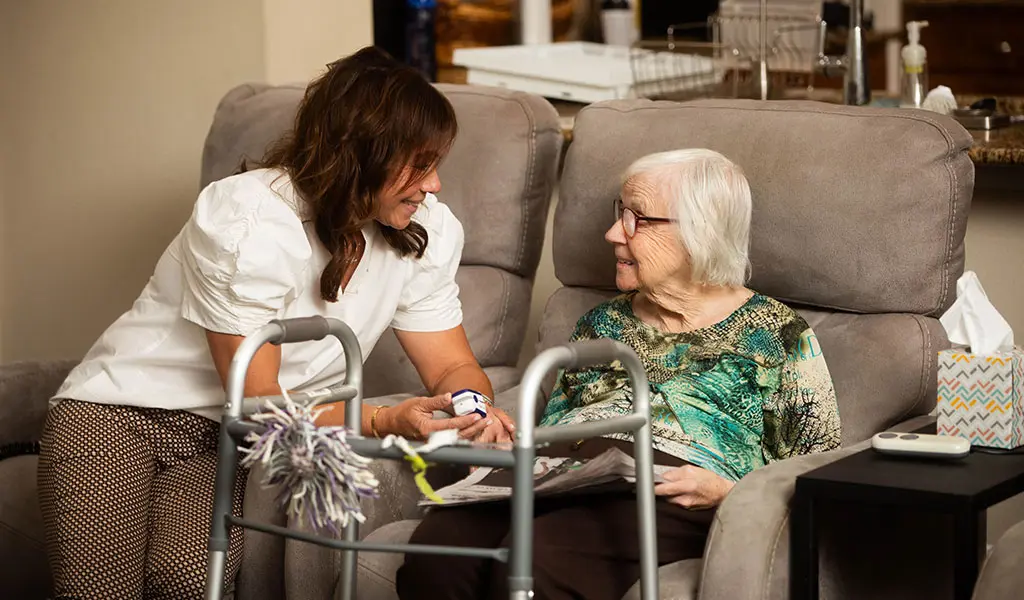
Every Cambridge Caregivers team member receives training on how to support clients with medication reminders and medication safety. While nonmedical caregivers cannot administer medications, they can provide reminders, help clients follow established medication routines, observe potential concerns and communicate observations to family members. Just as importantly, they provide accountability and consistency.
“Our caregivers are trained in the importance of medication safety and how to assist clients in this area,” said Shelley. “Also, they have excellent ‘soft skills.’ They know how to remind and support a client in a way that respects their dignity and, as much as possible, preserves their independence.”
Professional caregivers can also support an older adult’s overall routines – preparing meals and encouraging hydration and rest – which can improve medication effectiveness.
For families, that support can be invaluable. Knowing that a trained caregiver is checking in, providing reminders and helping a loved one stay on schedule offers peace of mind.
Need extra support at home in Houston? Cambridge Caregivers provides compassionate in-home care, including medication reminders, daily check-ins and routine support that helps older adults stay safe and independent. Contact our Houston team at (817) 646-4695 to learn more about care options for your family.